
24 Essential Digital Marketing Terms To Know in 2020

Every industry comes with its own jargons and digital marketing is the same. Knowing at least some of the marketing terms will help you work and collaborate with others much more efficiently.

We’ve separated the marketing terms into categories:

  • Broad Digital Marketing Terms
  • Metric-related Marketing Terms
  • Operational Marketing Terms
  • Sales funnel Terms
  • Website Strategy Terms

Broad Digital Marketing Terms

1. Brand awareness

Brand awareness is the degree to which people will be able to recall and recognize your brand. Therefore, brand awareness largely depends on brand recall and recognition of your consumers.

Brand recall is the extent of how closely connected your brand is to a product. 

Brand recognition is the extent of whether consumers will be able to recognize a brand through its attributes.

Generally speaking, brand awareness involves a situation where your customers will be able to see your brand and know of the solution that you can provide for them.

2. Buyer persona

Buyer persona is one of the most common marketing terms. They are basically a representation of your ideal customers. The information usually included in a buyer persona are demographics, psychographics, lifestyle and, sometimes, their role in a company. The more in-depth of a description you can provide of your buyer persona, the better because your buyer persona will help brands understand the motivations of their customers.

3. Digital marketing

This refers to any form of online communication aimed towards persuading people to buy a product or service.

4. Inbound marketing

Inbound marketing is a marketing approach that focuses on the customer. Usually, this focuses on the most ideal customer to a business instead of simply showing marketing messages to simply anyone. This can be done through various strategies, from social media marketing to blogging. As a result, you will be able to attract the right customers to your company which also helps with long-term scaling with better ROI.

5. Lead nurturing

Lead nurturing is a process that educates and builds trust between your business and your prospects to help guide them down the sales funnel. This involves providing personalized experiences to your prospects and converting them into customers.

6. Search Engine Marketing (SEM)

Often confused with SEO, SEM is the process that is aimed towards increasing your website traffic through paid ads on search engines. One example of this is by using Google Ads.

7. Search Engine Optimization (SEO)

SEO is a free digital marketing channel that takes a lot of time and effort that is all about pushing your website to the first page of search engine results where more people will be able to see and enter your website.

Metric-related Marketing Terms

8. Churn rate

Churn rate is one of the many marketing terms used to measure customer retention and contributes to the recurring revenue of the company. It also identifies the number of customers that a company loses within a given time period.

9. Cost per lead

Cost per lead is how much you spend on acquiring leads and it is also quite related to Customer Acquisition Cost which can be easily found in paid advertising channels.

10. Customer acquisition

Customer acquisition is related to the resources and processes involved in attracting new customers. This is related to brand awareness, lead generation and nurturing.

11. Customer acquisition cost

Customer acquisition cost (CAC) is the cost related to turning leads into a customer. In order to calculate CAC, you have to divide the money spent on attracting customers with the number of customers acquired in the time period that the money was spent.

12. Customer Lifetime Value

Customer Lifetime Value (CLV) is a predicted amount of net profit that can be acquired from one customer over the course of your business. Therefore, if you can increase your CLV, you will be able to increase the value of each customer. CLV is calculated by subtracting customer revenue with gross margin and dividing that number with your churn rate.

13. Growth marketing

Growth marketing is a marketing process that involves designing and experimenting. The purpose of this is to optimize and improve the results of a target area. As a result, growth marketing can help you achieve growth in your business.

14. Key Performance Indicator (KPI)

Key Performance Indicators (KPIs) are used as part of tracking the progress of a character towards a marketing goal. By setting your KPIs, you will be able to evaluate your business’ performance and optimize your marketing strategies.

Operational Marketing Terms

15. Content Management System (CMS)

A Content Management System (CMS) is a software tool that helps marketers and content creators organize and manage, as well as track their performance on the website content.

Some popular CMS examples are HootSuite, SproutSocial and Buffer.

16. Customer Relationship Management (CRM)

Customer Relationship Management (CRM) is a software used as a contact database mainly used in sales. It helps to identify insights and provide analytics to the business. However, its main feature is the ability to store contact information to help salespeople track their interactions with stakeholders.

Some popular softwares are HubSpot, Salesforce and Zoho.

17. Marketing automation

Marketing automation is a software designed to automate marketing tasks. It is all about nurturing leads along their customer journey by leveraging content to address your customer’s needs depending on which stage they are in. In short, you are catering content to your prospects based on their behavior which is more powerful than simply sending out emails to everyone. As a result, marketing automation will elevate the efficiency of your marketing efforts.

Sales Funnel Terms

18. Top of the funnel (ToFu)

The funnel shows how you turn prospects into customers.

The top of the funnel (ToFu) refers to the first stage of the buyer’s process. At this stage, the buyer is aware of a problem and, as a result, they are actively looking for a solution. They will likely consume informational or educational content such as reading a blog or watching a video. You want to have your visitors take the desired step to move down the funnel.

19. Middle of the funnel (MoFu)

The middle of the funnel is the middle stage of a prospect’s buying process. They will have identified their problem, are still actively looking for a solution and consuming content that can present your business as the solution. This is also where responsibilities move from marketing to sales.

20. Bottom of the funnel (BoFu)

The bottom of the funnel is the last stage of a buyer’s process. It is also when the buyer has identified a problem, done their research and is ready to buy. Here, buyers will usually request a free demo or a free consultation and are beginning to talk with a salesperson.

Website Strategy Terms

21. A/B split testing

A/B split test is an experiment comparing 2 variables. Specifically, it does this by presenting it to a randomly split audience and comparing the results over time.

22. Conversion rate optimization

Conversion rate optimization (CRO) is a method used to increase the number of conversions on a webpage without having to bring in more web traffic. In any case, CRO is a method you should go with if you’d like to make the most of your marketing efforts.

23. Landing page

A landing page is a web page used for lead generation. In addition to this, the more optimized a landing page is, the more likely that your website visitors will turn into leads.

24. Thank you page

Once customers submit information on a landing page, they are usually redirected to a thank you page. Its purpose is to thank them for the submission as well as providing more steps that they can take with your business. These help to immediately nurture your leads and provide better customer experience.

Conclusion

Digital marketing is filled with jargons, therefore, learning these terminologies will help you understand more about this topic and optimize your marketing efforts. Ultimately, we hope you have gained some great knowledge from this article!

If you are interested in including or developing your marketing strategy, let our experts at Marketing Guru help you! Get your free consultation today.
MG-Blog-8

How To Start Affiliate Marketing For Beginners | 2020 Guide

Passive income. Most people who strive for passive income initially achieve it using affiliate marketing. You may be wondering about how to start affiliate marketing on your own or as a side income for your business. 

The idea of affiliate marketing is to promote other people’s products. It is usually with the help of affiliate marketing programs or networks. You typically earn a percentage of those products sold through your marketing as part of revenue sharing

As defined by Shopify, “Affiliate marketing is an online sales tactic that lets a product owner increase sales by allowing others targeting the same audience—“affiliates”—to earn a commission by recommending the product to others. At the same time, it makes it possible for affiliates to earn money on product sales without creating products of their own.

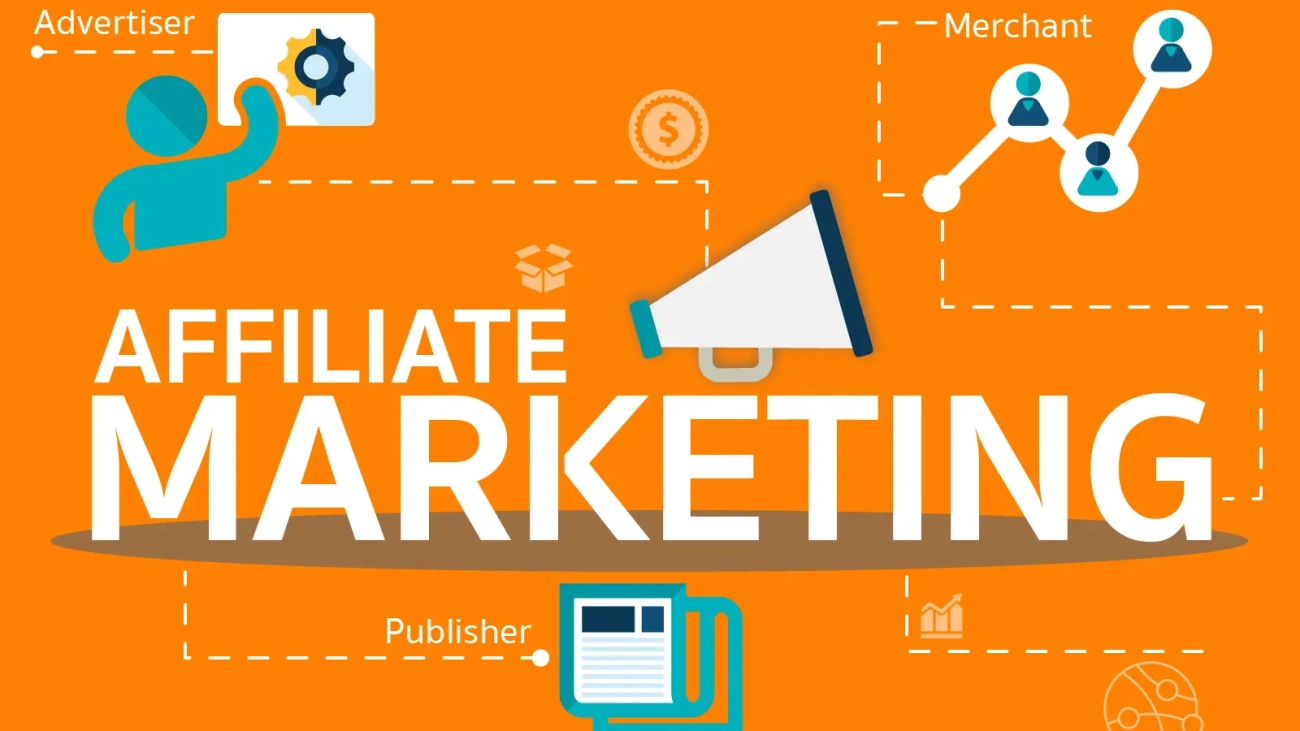
There are 4 different parties involved in the process of affiliate marketing: the product creator (or the merchant), the affiliate network, the marketer, and the customer. It allows for both product creators and product marketers to receive a share of revenues in accord with their contribution.

The Merchant

The Merchant, also known as the product creator, or the brand. These people are the ones who create the product for selling and can range from big corporations to small businesses. As long as they have a product to sell, they are the merchant.

The Affiliate

Similar to the Merchant, this party can be big as well as small companies. They can earn from a few hundreds of dollars to thousands or millions a month.

They are the ones who do the marketing to attract and, essentially recommending the products to potential customers. This marketing effort is all in hopes that the customers will end up buying the product through our link or using our code, usually for an extra discount. It can also be in the form of an entire site dedicated to certain products.

One of the most popular affiliate network sites is This is why I’m broke.

The Consumer

This is the customer, they are the ones who allow the affiliate system to run. Without customers, there will be no sales for the Merchant. Neither will the affiliate receive any commissions.

The affiliates are ones who market their products to the consumer however they see fit. Some examples are through social media, content marketing, or even digital billboards. 

The Network

Not many people consider the network as part of affiliate marketing. However, it is still an essential part of affiliate marketing programs. There is an intermediary between the affiliate and the merchant.

Affiliate networks such as Commission Junction or ClickBank will help the affiliate marketing process much easier by handling the payment and product delivery.

Depending on the product, the affiliates may be required to enter the affiliate network as some products may not be available elsewhere for affiliates to enter.

To summarize, you can become either a merchant or an affiliate marketer. 

If you were to become a merchant, you can have others promoting your product. This promotion is in exchange for giving others a commission for their sales.

If you were to become an affiliate marketer, you can choose one or more products to promote. Then, you can market them to consumers to make money.

For today, we will be discussing how to become an affiliate marketer.

For Merchants: How To Start Affiliate Marketing

If you want to be a merchant, you will have to create affiliate marketing programs. You will be selling your product with the help of affiliates. This can be done in 4 steps. Keep in mind that these are not easy, but many people have already achieved it.

  1. Come Up with a Product Idea
  2. Validate Your Product Idea
  3. Create Your Product
  4. Become Part of an Affiliate Network

Step One: Come Up with a Product Idea

This step is most likely the easiest among all the other ones. Your idea does not have to be completely original. Rather, innovate from something that already exists. 

Think of how to make a product you are already using better. This should be within the field of your own interest. However, do not get too attached to your idea. Stay flexible to make sure that you can adapt to what consumers want out of your product.

Reading reviews of those products are extremely helpful in coming up with those ideas.

Always ask yourself, will people pay for this idea?

This leads us to the next step…

Step Two: Validate Your Product Idea

This step is essential to making sure you can actually obtain sales. It will help you save time, money and effort. 

Now, to really make sure that people would be willing to buy your product, simply ask them. 

Be specific and make sure that you are asking if they want to buy your product because, most of the time, people will likely say that they like something just for the sake of being nice. While it is perfectly alright to be nice, we need a surefire answer in order to make sure that your product idea is good enough that people will see the value in buying it.

You can ask your friends or strangers on various social media. Make sure that you are asking people who are related to the product!

For example, if you are interested in selling a step-by-step guide to starting a small business, you can ask people who have commented or tweeted about a blog related to entrepreneurial ventures. Send out plenty to make sure you have enough people in your for the rest of this step.

If most people replied that they would not buy this product idea, take into account their feedback. What other comments did they make? Is there a way for you to improve upon this idea? Either develop your current ideas or pick a new one and repeat the steps above.

After a good number of people have replied with a yes, the next step is to answer those replies. Provide a link for them to buy, and that once a certain number of people buy it (let’s say 5 ), you will create it.

The reason for this is to confirm that people actually want your product idea enough to spend their money on it. 

Once enough people have bought your idea, it is time to start making the product.

Step Three: Create Your Product

Depending on your product idea, this step will vary. One of the best ways to create any product is to first learn how to do it.

Let’s say you will be selling an online course, there are plenty of resources online that can teach you how to do it. So learning these are a great starting point for you. 

Digital products are probably the easier ones to create without too much financial investment needed. 

Step Four: Become Part of an Affiliate Network

If you are selling a digital product, tools like Digital Product Delivery or Gumroad can be very easily set up as these platforms will already take care of the commission process and other payments.

Next, search for and reach out to other merchants who have a decent following within your products’ niche to promote it. This can easily be done with some simple social media and google search.

Depending on how niche your product is, the easier it will be to pitch to other merchants.You will want to contact them by simply introducing yourself, your product, and asking them to partner together for a shared revenue.

Side note: For digital products, affiliate commissions are usually 50% or even higher. This is because there is no cost of replication. Everyone wins from the revenue share, therefore, there is no need to be greedy on this.

Start from trying to get at least one partner first, you can work out the commissions and details later. Just make sure you get started.

Another route to start affiliate marketing for beginners is to become an affiliate marketer yourself.

For Affiliate Marketers: How To Start Affiliate Marketing

It is much easier to start out by building enough traffic on your marketing channels first before actually selling. 

Below, we will be describing the 4 total steps you can use to start out with affiliate marketing. Keep in mind that this is just one way you can go about affiliate marketing and there are other ways as well. Here are the 4 steps:

  1. Pick a niche and review products
  2. Building an email list
  3. Live Webinars
  4. Pay Per Click Advertising

Step One: Pick a niche and review products

Think of the product you are already using in your day-to-day life. Is there one you are particularly interested in? 

This could be a book, a kitchen gadget, or hair styling tools. 

You can look around for the exact product or something similar in affiliate marketing networks. 

One of the places with a wide variety of products is Amazon Associates.

Make sure that your product recommendations are genuine and authentic, that way people will not be thinking that you are just trying to make some quick money off of your audience.

When writing blog reviews, you can use affiliate links. Affiliate links are the links to the products you are recommending. They usually follow a regular URL with “/ref…” at the end.

However, as you can see, relying on other people would require a large amount of traffic to actually make a good amount of money. This leads us to step two.

Step Two: Building an email list

Email marketing is still one of the best channels these days. It is also a great way to start affiliate marketing for beginners. Here are 3 ways you can do this on your website.

Header Bar

A tool we recommend is Hello Bar.

This will put up a call to action at the very top of your website. Offering an incentive such as an ebook that includes your product reviews or sending your audience to an email of the product review video will help as part of your marketing strategy.

Exit Intent Pop-up 

Hello Bar can also be used for this.

An exit intent pop-up will show up on the screen when visitors show signs of leaving your website such as moving the mouse towards the “X” button. You can use it as a way to offer some kind of resource your audience will be interested in as an exchange for their email.

Sidebar Widget

When it comes to sidebars, affiliate marketers must make sure that the ones on their website are not overly cluttered. Having only one call to action is enough. This should also provide some kind of value to your audience in exchange for their emails.

Some tips in affiliate marketing for beginners are to send your audience an update once a week. It is important to not make all of your emails about sales. Only when you create a new product-reviewing post.

Step Three: Live Webinars

This step can be done once you have gathered a few contacts.

These are much more engaging content that is very helpful in higher ticket items. Your audience are likely to prefer watching a live presentation much more than reading a blog review.

LeadPages is a popular tool that you can use to create a simple landing page for your audience to sign up for your webinar. Don’t forget to promote it on your social media to inform your followers one  week ahead of the event!

These can be hosted on Google Hangouts for free or on Zoom as well.

Use this opportunity to talk all about your product as well as answering your audiences’ questions about it. 

If you can get your merchant to provide you with a deal or bundle especially for your audience, it will serve as a great incentive for people to buy.

Step Four: Pay-Per-Click Advertising (PPC)

Once your affiliate marketing starts to take off, it is time to move up to paid advertising.

Although this can be a bit of a learning curve, your affiliate marketing business can scale much more with this step. You can use PPC to:

  • Grow your email list
  • Grow your sales
  • Get more people to sign up for your webinars

When more people sign up for your email list, you will be able to market to them again. This will grow your chances of sales because they have shown interest in your content and are more likely to trust your recommendations.

An efficient and time-saving method of email marketing is to set up your own autoresponder that markets to your email list in an email sequence. There are various tools to help you with this, one we recommend is MailChimp.

Conclusion

To sum up how to start affiliate marketing, there are two paths that you can choose. As a merchant or as an affiliate. Although becoming an affiliate is somewhat of an easier path compared to merchants. The two routes are equally worthwhile. It all depends on your preference as well as your current knowledge.  

As this guide is about affiliate marketing for beginners, we hope this step-by-step process has been helpful! Now go out there and make it happen.

If you own a business or are currently looking for ways to increase your sales, let Marketing Guru help you. Get a free consultation for your digital marketing strategy today! Contact us here.

Read More...

image-4

5 Influencer Marketing Trends That Your Business Should Use in 2020

The social media marketing game is huge and has grown to the level where brands engage social media influencers to help their brands gain awareness and attract new customers. This is why it is important to be aware of the influencer marketing trends.

Influencers’ have reach and yields that are not to be underestimated. With social media playing a pivotal role in many people’s lives, it is no surprise that influencer marketing – a once supplementary marketing strategy, has grown to become a primary strategy employed by the biggest companies in the world.

What is Influencer Marketing?

You’ve probably heard of the term “influencers” on social media before. Influencer marketing is a collaboration between a brand and one of these influencers to market the brand’s product or service. The purpose of course is to tap on the influencers’ popularity to gain brand recognition and win customers from the influencers fanbase.

The question that you’ll probably then ask is “What difference is influencer marketing compared to using a celebrity?”. Influencers are different from celebrities in the sense that they can be anyone found on anywhere. They don’t have to be popular movie stars or A-list personalities. It could be a reputable journalist, a respected designer in the fashion industry or anyone in any industry really. What makes them an influencer is the following and reputation that they have because this is what gives them influence. They are known people or experts in their own domain and hence, this makes the content that they share the most engaging and noteworthy. Thus, businesses in their domains will look to reach out to use their influence on the particular demographic that they are targeting.

The Influencer Marketing Industry

Influencer marketing has grown into a $15 billion industry. Despite the problems faced by this industry, such as influencers with fake followers, it is still an industry that continues to grow rapidly. This can be attributed to consumer trends and behavior such as, 74% of consumers trusting social networks when making a purchase decision. Influencer marketing also has shown significantly high returns on investment for businesses with the average influencer marketing campaign earning $6.50 for every dollar spent.

While it is important to grow your business through digital channels like SEO, the influencer marketing industry is definitely a good alternative mean. The figures mentioned above should allow you to grasp how this industry is able to grow into an industry with the magnitude it has today. It should also very likely kindle your interest in trying to grow your business through such a channel. To help you in your influencer marketing journey, here are some trends that your business should look out for in influencer marketing for 2020.

Trend #1: Use of Micro-Influencers

When engaging in influencer marketing, typically businesses would want to be as cost-effective as possible. This means getting the most value out of the money spent on engaging these influencers. At the same time, businesses would require the meeting of certain KPIs like engagement, conversions and leads generated when utilizing influencer marketing.

This brings about the struggle of what is the appropriate kind of influencer to pick. Influencers can be categorized into three different categories: nano, micro, and macro-influencers. Nano and micro refer to the influencers with smaller reach – in the range of 1,000 to 100,000 followers.

Now, your first reaction is probably that nano and micro-influencers probably won’t get you enough traffic and awareness that your business is looking for as they could only get you 100,000 followers, at best. But, do bear in mind that costs for engaging in influencers are not cheap. Engaging influencers usually cost in the range of $10 – $25 per thousand followers for a post. Below is an influencer engagement pricing chart did up by Influence.co. You can see that the rates scale exponentially when it goes into the macro/mega-influencer range.

influencer.co marketing influencer rates
Average Sponsored Instagram Post Rates by Influencer.co

 If your business operates in a niche field that the micro-influencer is actively involved in or has a follower base that may have interest in, it may be more cost-effective for you to use these smaller influencers. This is because consumers these days desire engagement with the brand and it has been proven that engagement rates are higher with micro-influencers who have an engagement rate of 3.6% compared to macro-influencers’ 1.5%. Higher and more genuine engagement is also more likely to help translate the extra reach you’re getting into sales.

Engagement Rates Among the Different Influencer Categories (Source; Later.com)

Trend #2: Emerging Alternative Influencer Marketing Platforms

Typically when engaging in influencer marketing, you would think of Instagram as the undisputed king of influencer marketing and that is probably still true today. However, there are other platforms that are starting to emerge as major channels in influencer marketing.

Tik Tok, a short-form video social platform has seen a sudden growth over the past year, amassing 2 billion total app downloads. Its young user base – 66% of them under 30 years old, has allowed it to be a platform that is suitable for businesses targeting the younger age demographics. Major brands like RedBull have also engaged in smaller Tik Tok influencers. RedBull hired KeeOh, a Tik Tok content creator with 5,000 followers to create a funny short video involving their product, using humor to make the followers interested in its product. It is a perfect example of using smaller-scale influencers to gain cost-effective yields on TikTok by utilizing memorable content.

 Twitch, which is a video game streaming site, home to the best gamers and internet personalities, is also utilized by non-gaming related brands to advertise their products. For example, KFC has used one popular Twitch PUBG streamer’s (Dr. Lupo) channel to advertise their marketing campaign. This helps their brand be noticed by the viewers and create demand amongst them. Twitch’s platform, while primarily gaming related, also has streaming categories such as “Just Chatting” and “IRL”, allowing these streaming personalities to just stream live feeds of themselves hanging out and talking to viewers instead of playing games. The interactivity for influencers on these platforms with their audience is high because of the live chat in each streamer’s channel, which allows advertisers to also engage almost directly with the influencers’ audience.

These alternative platforms are definitely worth checking out as they may help businesses to be more specific in targeting and could prove to be more cost-effective in terms of gaining engagement and brand awareness.

Trend #3: Long Term Partnerships with Influencers

Another trend that will prove to be effective in 2020 for influencer marketing is long term partnerships with influencers. Brands are going to become more invested in influencer marketing and as such, they start to seek long-term partnerships with influencers instead of a one-time advertisement or endorsement.

Brands will start forming partnerships with influencers and engage them in the long run. This is useful as it creates more touchpoints for the brand with the influencers’ followers, allowing for more content to be produced. The result is a more cohesive campaign with a better brand recall among the influencer’s followers.

gymshark influencers marketing
GymShark’s long-term collaboration with Fitness Influencers helped them grew exponentially (Source)

One trend that will be useful to marketers in 2020 is to go beyond the series of influencers endorsed posts and have the influencers be involved in the products. Brands like GymShark were first to hop onto this strategy early on in their business. GymShark started off its marketing by sending out free samples of their workout clothing to influencers and eventually ended up collaborating with some of these influencers to create the influencers’ own line of products. The partnerships and collaboration with these influencers will help businesses to build a greater sense of trust and commitment toward the brand with their followers, resulting in long term benefits.

Trend #4: Using a Storytelling Approach

Generally in sales advertisements, companies tend to come up with catchy, memorable and short captions in order to ensure that its target audience is kept interested and that their attention is captured. In influencer marketing, however, it has become a trend for companies to do the opposite of the traditional advertising methods.

The use of an influencer would mean that businesses want to create a message that will resonate well with their followers. As such, the best way is to craft a story that details the influencer’s personal experience with their use of your products or services.

Instagram’s caption limit of 2,200 words has allowed influencers to write in detail their story and experience with using the endorsed product or service. Functions like Instagram Stories can also be utilized to craft a cohesive story regarding your brand.

Since followers of these influencers get a glimpse into their daily personal lives, they would be able to understand and see some of the struggles faced by these influencers. By showing how your company’s product or service helps these influencers solve some of the issues that they face or their personal experience with your product, their followers would be more sold and feel more involved with the product.

Trend #5: Utilizing Video Content

Video content in marketing is definitely hot with online marketers now with 87% of them using it. This is probably due to how video content gains on average, 135% more organic reach as compared to other forms of content.

This explains why it is essential to incorporate video content marketing into your influencer marketing campaign. Influencers are able to help you create an array of different video content, from product reviews to short-form stories, unboxing videos and even live streams

By creating content based around your product will allow these influencers to better promote your product and in the case of live streams, they can engage your target audience better as it allows for direct chatting with their followers. The result of these efforts is a greater appeal visually for your target audience.

Conclusion

Influencer marketing is a channel of marketing that should be tapped on due to the number of engagements and brand recognition you can create. These 5 trends on Influencer Marketing in 2020 should be able to help guide and give you an idea of how your influencer marketing campaign should be like.

You may wish to consult a digital marketing agency with these tips in mind to help you run your next influencer marketing campaign!

Read More...

db-17-1024x684

The Top 5 Digital Marketing Trends in 2020 You MUST Know to Stay Competitive

The digital marketing landscape is one that is ever changing and constantly evolving. As the new decade starts, digital marketers must learn how to adapt and stay ahead of the curve in order to thrive in the competitive digital marketing landscape. We enter this new decade a smartphone obsessed society, with people spending an average of over 3 hours a day on their smartphones. This reliance on smartphone brings about opportunities and new ways digital marketers can explore to better reach their customers. In this article, we will discuss the quintessential trends for digital marketers to understand to succeed in the upcoming year.

1. Voice Search

“Alexa, where can I find the nearest Thai restaurant?”. Questions like these will become more common with people demanding more convenience from their smart devices. These voice enabled devices act as an assistant to help people in searching for products online.

Voice technology has already been a significant force in the search engine domain. Google announced in 2016 that 20% of the searches it has received have voice intent. This figure has grown to a predicted staggering 50% of searches in 2020.  Furthermore, it is predicted that by 2022, 40% of a surveyed population by Capgemini would prefer using a voice assistant as opposed to manual search.

There are actionable steps that us digital marketers can take to capitalize on the trend of voice assistants. Digital marketers can shift their focus of targeting shorter keywords to targeting long-tail keywords instead. This is important for targeting users of voice search because of the way they are likely to search for the things. For instance, users will search with full sentences when speaking. Like: “Can I find out what’s the best digital marketing agency in my area?” instead of typing “Best Digital Marketing Agency near me”. This would change up the game for digital marketers as they have to now look at more long tail keywords to target.

Additionally, there are companies like Jetson.ai that help businesses craft and transform their online marketplace into a fully voice search integrated one. Allowing consumers to buy from your site using only their voice. Below is a video of Jetson in action.

With these statistics showing the move of consumers to voice search and purchasing, capitalizing on voice technology with these tools and tips is paramount to a digital marketer’s success in 2020.

2. Diversifying Marketing on Social Platforms

Facebook, Instagram, LinkedIn, Twitter. These are the most renowned social media platforms that come to mind when people talk about social media marketing. However, what they fail to notice is the trend of companies seeking to do their marketing on other platforms and increasing their engagement by doing so.

Take for example: TikTok. TikTok is a social short-form mobile video platform where users can share their self-produced entertainment content. TikTok is a rising star in social media marketing, with an impressive download volume of 614 million in a single year, outmuscling established competitors like Instagram. TikTok’s growth can also be seen in its sudden growth in ad spending, growing 75 times from May 2019 to November 2019 in the span of only half a year.

Pinterest is also another emerging platform for companies to marketing their products, especially for companies that have females as their target demographic. Presently, Pinterest have a monthly active user base of over 300 million users, with 70% of these users being female. Pinterest is great for digital marketers to share their visual content, ideas and style inspiration.

In 2020, with these emerging alternative social media platforms, it is important for you as a digital marketer to keep up with the trends and appropriately use the different varieties of social media platform to effectively capture your target audience’s attention. Choose wisely and market smartly!

3. Personalized Marketing

Let’s face it, if you’re an online retailing site, you would be more than glad to have 15% of your visitors converting into customers. But the fact of the matter is that it is highly likely that you’re only going to see about 1 – 5% of your site’s traffic convert into customers. This most likely has got nothing to do with your marketing efforts being low quality or that your products are uninteresting.

The likely reason for why your visitors leave your site is probably because the messages they see on your website don’t resonate with them. To curb this issue and possibly boost conversions, you would have to make use of personalized marketing tools to ensure that your visitors needs are satisfied.

One very good example of a company that does personalization well are companies like Asos, End Clothing and Amazon. These companies make it a point to track your buying patterns and show things that you are likely to buy based on your cached buying and product viewing history. Additionally, they notify customers through e-mail on deals that they think are of interest to them. 

To make the best of this trend as a digital marketer, tools such as OptinMonster and Barilliance could help your company to create personalized exit intent pop-ups and even personalized floating headers to promote relevant deals and sales to customers that are deemed interested. By tapping on this trend of personalized marketing, you could bring your digital marketing game to the next level as well as see your conversion rates soar. With companies seeing a sales increase of over 50% after utilizing such personalized marketing tools.

Personalized marketing is the future and will become commonplace in the future of e-commerce and digital marketing. Mark our words.

4. Augmented Reality Content

The future of ecommerce is in augmented reality. Shoppers want to be able to experience and feel what an object looks like in their space or on them without even having to leave the house. The amount of convenience this could bring to them as well as enhance their shopping experience is insurmountable. 

AR being an upcoming trend is also backed by consumers’ sentiments as surveys have shown that 70% of consumers believing that AR could bring them benefits and 67% of media planners wanting AR in their digital marketing campaigns.

Presently, we are seeing furniture companies like IKEA implementing AR successfully into their online stores. Customers can use the AR function to see how a piece of furniture would look like in their living space! This helps to bring more trust and satisfaction in the consumer shopping experience. The level of immersion brought by AR can help to create a shopping experience that is hard for competitors not using it to replicate, helping your business appeal better to potential customers.

5. Automated Advertising Campaigns Optimization

AI and machine-learning are powerful tools that we as digital marketers should make full use of. There are algorithms designed to help ease our digital marketing journey by optimizing our online advertising campaign.

There are software out there like SmartyAds and SalesForce Marketing Cloud, that are able to help you with your online advertising. Automating tasks and processes such as the keyword bidding process to even helping with personalizing your emails to each client.

By acquiring the service of such software, you’ll free up valuable time as a digital marketer to do tasks that robots and algorithms can’t perform. Automation is the way to go in terms of making your digital marketing campaigns more effective in the future.

Still Can’t Figure Out How To Strategize in 2020?

Fret not! Our gurus at MarketingGuru are here to help your company with campaigns and digital marketing strategies. We have a team of creative and trendy gurus who are consistently in the know with regards to marketing trends. To find out more about our services you can head over to our site! As a full service digital marketing agency we are experts in not just SEO, but also in Social Media and Pay Per Click marketing as well.

You can get a FREE SEO AUDIT from our expert gurus by dropping in an email to us. We wish you all the very best in your 2020 marketing endeavours!

Read More...