Best Practices to Finding an Influencer for Your Brand

Finding an influencer to collaborate with your brand can be hard at times. There are a few things to keep in mind. Collaborating with the wrong influencers can make or break your brand. It can also waste your already-high marketing budget which is why we are here to help guide you. Keep on reading to find out the exact steps to finding the right influencers for your brand!

So, let’s start with the basics.

What are Influencers?

It is a mixture of both old and new marketing tools. It is similar to a celebrity endorsement but has a modern-day twist. This twist is the content-driven aspect of influencer marketing. Influencer marketing, however, does not just involve celebrities. There are many people today with a good amount of following who may not consider themselves ‘famous’ offline but are still influencers nonetheless. 

So, what are influencers and what qualities define them?

  • the power to influence people’s purchasing decisions due to their authority, knowledge, or relationship between them and their audience
  • someone with a certain amount of following in a niche market and actively engages in it

Traditional media usually misunderstand the difference between celebrities and online influencers.

Influencers have built a following of loyal and enthusiastic audiences. They have done so usually through creating quality content online. This audience does not care much about your brand, rather they care about the opinions of the influencers they follow.

What is Influencer Marketing?

Influencer marketing involves the collaboration between a brand and online influencers. This allows a brand to market one of its products or services. It can be executed in a variety of ways, unlike celebrity endorsements.

Influencers are unlike celebrities in that they can be anyone and they can be located anywhere as long as they have a substantial amount of following on the website or on social media. They can be a talented nature photographer on Instagram or an experienced baker who blogs. An influencer can grow a following in any industry and on any online platform.

6 Best Practices to Finding an Influencer

Below is a step-by-step guide on how you can start finding an influencer to promote your brand. Following this best practice will help you execute on your influencer campaign effectively. 

  1. Know your marketing goals
  2. Know your desired influencer campaign
  3. Find influencers in your industry
  4. Find influencers who have promoted your competitors
  5. Understand the influencers’ authority
  6. Track your influencer campaign results

1. Know your marketing goals

Finding an influencer requires you to know your marketing objectives. This will help you find the right influencers that can help you achieve your goals effectively.

Start by outlining what you want to have happen as a result of your influencer marketing efforts. These objectives can be any of the following:

  • Building brand awareness
  • Building brand identity
  • Growing your brand’s audience
  • Increasing engagement with your brand
  • Generating leads
  • Increasing sales
  • Building customer loyalty

2. Know your desired influencer campaign

Map out how you want your influencer marketing to go down. During this process, consider what type of campaign will help you connect with the type of influencers you want to work with and the audiences that you want to reach.

Here are a few common types of campaigns you can try for your brand:

  • Sponsored Content: You can pay influencers to share your content or promote your product. They can also create content related to your brand.
  • Hosting contests and giveaways: Contests can be leveraged for influencers to mention your brand or share your content.
  • Brand ambassadors: This involves partnering with an influencer and having them regularly promote your brand while you provide them with discounts and perks.
  • Gifting: You can gift influencers with your product in exchange for them mentioning or posting about your brand.

3. Find influencers in your industry

 Ideally, kicking off your influencer marketing campaign with a more well-known figure will help guarantee that your brand will achieve its goals. However, some factors to consider when selecting influencers for your brand will involve determining your budget. Influencers with a large following and high engagements know what they are worth and, therefore, should be compensated as such.

4. Find influencers who have promoted your competitors

Finding an influencer who has previously worked with your competitor can significantly help increase your chances of succeeding. These influencers are much more likely to work with your brand as they have already shared similar content in the same niche.

Tips: Search for influencers by browsing hashtags that are related to your industry on social media. The influencers with highly engaging content within those hashtags are a great group for brands to reach out to.

5. Understand the influencers’ authority

Conducting an influencer analysis is very important to finding an influencer that suits your marketing goals. The influencer should have an authority that is relevant to your industry and their following should be large enough for your goals.

Consider the following factors when conducting your influencer analysis:

  • Number of followers
  • Engagement rate
  • Website rankings
  • Content quality
  • Niche coverage

6. Track your influencer campaign results

Be sure to track your KPIs when launching your campaign to help you determine the effectiveness of your influencer marketing. Review the results once it is completed. Whether your campaign was a success or if it needs work, you can analyze your metrics and learn from them. Apply what you learned and adjust future campaigns accordingly.

Conclusion

Finding the best influencers for your brand will take time and effort to find and analyze. Reaching out to them and negotiating a solution that will be mutually beneficial for you should be a top priority as well. In the end, it is all about executing on what you have already planned out.

If you are looking to find a partner who can run your entire influencer marketing campaign, let Marketing Guru help you! We have professional experts who can handle all your digital marketing needs. Contact us today to receive a free consultation on your digital marketing strategy!

How Are Native Advertisements Good For Your Brand?

Native advertisements are part of digital marketing. The increased sophistication in how audiences interact with content has led to the birth of native advertisements. It provides brands a new way to get their messages out to their target audiences.

Today, we will be showing you the different ways you can get started with native advertisements, why it is important and how you can use it to reach your business or marketing goals.

What are Native Advertisements?

Native advertisements are a form of paid marketing channel that is created specifically for the sake of fitting the form and function of the user experience on the site they are placed in. In short, they are advertisements that fit in with the platform it is advertised in.

Native advertisements can be found in many different websites, from a well-known publisher site to various social channels. Because they fit seamlessly into the user experience, they appear much more subtle to the user compared to the usual online advertisement that forces itself onto the audience. This helps to not break the trust of an audience.

This form of advertisement is also growing in popularity. According to eMarketer, native advertisements made up almost 60% of display spending in 2018.

Why Use Native Advertisements?

Consumers today are used to consuming content on a daily basis. It makes up the majority of people’s online experience.

The first thing most people do in the morning is to check their mobile phones and catch up on the world through social media or online news. From television shows to social media posts, content can be found everywhere. 

eMarketer has reported that an average US adult spends over 12 hours a day on media consumption in 2019.

Today’s consumers have essentially trained themselves to ignore the overwhelming amount of advertisements they see every day. In addition to this, there are also ad-blocking software that completely removes advertisements from any site its users browse into.

These reasons are exactly why native advertisements are an amazing choice to market with. Native ads are designed to look just like any other content on a page. This results in native advertisements receiving up to 18% higher purchase intent from consumers.

3 Types of Native Advertisements

1. In-Feed Units

An example of in-feed units are the sponsored posts in your social media feeds or a publisher’s website. They look like regular posts on a platform. However, different platforms will show different styles of in-feed ads depending on their user interface. It will usually appear alongside the word “Promoted” or “Sponsored Content”.

For example, LinkedIn has its own in-feed ad unit called “LinkedIn Sponsored Content”. Their ads look and feel just like any other LinkedIn posts.

2. Paid Search Units

Native ads can also be seen on search engines. An example of this is Google’s search results. If you have ever advertised on the search results page with Google, those are technically native advertisements. This is due to the fact that they look exactly like organic search results.

3. Promoted Listings

For any online shoppers out there, these promoted listings are what you see very regularly. They are also extremely effective for selling products. The reason for this is because promoted listings usually appear when consumers are actively searching for a related product to buy. This places the customers much further down the sales funnel.

4. Display Ad With Native Elements

These types of native ads look like a regular ad you can see online. These are usually in the form of a website banner. The reason these can be considered as native advertising is due to the fact that the ads are contextually relevant to the website they are on.

5. Recommendation Widgets

These are where you can find native advertisements on publisher sites or social media appear as a “recommended” content. These can often be seen positioned on the side of a webpage, at the end of an article, or as part of a list of articles.

By appearing as a recommended content, viewers are much more likely to see your advertisement rather than ignoring them because they are actively searching for a content to consume.

Viewers are less likely to ignore your advertisement because native ads will appear as a recommended content. Additionally, they are also actively searching for a content to consume.

6. Custom Native Advertisements

These are still a newer form of native advertising. The rapid growth in technology and publishers have allowed the boundaries of native advertising to be pushed further.

For example, Instagram and Snapchat allow brands to place native advertisements in the form of a camera filter. This form of media fits well within its platforms. It also allows the audience to interact with brands in a more engaging manner compared to other forms of advertising.

The Future of Native Advertisements

There is no doubt that social media have transformed digital marketing completely. Social media makes up about three-quarters of the US native display ad spend. This number will also likely keep growing as more brands turn towards digital marketing.

Native mobile advertisements will likely become more of a key investment area for most businesses. This is considering mobile devices account for over half of all website traffic.

Another growing opportunity is videos. According to IAB Video Ad Spend Study in 2018, half of advertisers will be increasing their ad spend. They claimed that they will be specifically spending more on video ads.

As a result, the future of native advertisements will see a lot of growth on social media platforms, mobile devices, and video ads. 

But if you are considering having an expert help you out, let MarketingGuru help you! Contact us for a free digital marketing strategy consultation today!

image

What is Branding? MarketingGuru’s Simple Guide to Branding Your Business

Ever wonder why Apple manages to get its customers so psyched for their latest launch all the time? Ever question why people would pay a significantly higher price for a bottle of Evian water as compared to other bottled water?

The reason why these phenomena occur lies in the branding of those companies. These companies have branded themselves well enough and are in the eyes of the consumers, products that are valuable.

Simply put, branding amplifies your products and services value.

Today, you will learn what is branding and how it can you establish a branding strategy to help with your business’s growth.

What is Branding?

In order to fully grasp what branding is, you must know that your brand doesn’t come to life overnight from your marketing team. Branding is what your company is in your customer’s minds. This perception is shaped as a result of all the interactions and impressions that your customers have with your company and its products.

Is your company the unorthodox, innovative company that goes against the grain? Is the product or service you’re selling the value for money option or is it the premium one that only an exclusive group of people are willing to afford? You must be able to decide on all these things in order to effectively position your company and create a brand that suits your desired market positioning.

omnichannel branding
An effective Branding Strategy is an Omnichannel one

Branding is also omnichannel. This means that every channel or mean that you have to reach out to your customers matter as it is a sum of all the impressions your customers have of you. Your customers will expect the same type of service, tone, and experience in every available touchpoint you have with them. Therefore, it is also important to show consistency and align with their expectations on all the different channels your company exists on.

The goal of branding is to ultimately build a strong, differentiated and positive perception for your company in order to effectively stand out from your competition and build a firm, loyal customer base.

What Should You Achieve From Branding?

Before embarking on crafting a branding strategy for your business, you must know what you want to achieve out of branding, much like every other marketing plan or strategy.

The main objective of establishing a brand is to differentiate yourselves and get your target audience to view your company as a trustworthy influencer in your industry. That is the big picture of what branding is supposed to do for your company.

While that is the theme that branding is built upon, your brand be able to also meet the following objectives:

  • Have a crystal-clear brand message delivered

This helps your consumers know in a short sentence or phrase what your brand stands for and what it seeks to do.

  • Connect and resonate with audience sentiments

Your brand must be able to have ideas and messages in the minds of consumers that resonate with what they need and expect from brands in your industry.

A good example would be Adidas’s message of “Impossible is Nothing” which clearly sits well with their target audience’s aspirational thoughts when partaking in sporting activities.

  • Establish Your Credentials

Branding has to help you establish the trust between you and your potential customers. It has to help your business reaffirm its reliability as well as trustworthiness in the eyes of the market. This will then allow you to stand out as a front-runner in your industry. It is exactly why people prefer a can of Coca Cola over a generic can of cola. People understand the quality and trust that Coca Cola always delivers on its products as opposed to a brandless cola.

  • Inspire and Motivate Your Target Audience

An effective branding strategy will allow your business to inspire the target audience to take action and buy the products or services that you’re selling.

How Do I Establish My Brand?

After knowing what needs to be achieved from your branding campaign, the next question will be what are the steps that you can take to create this presence.

Of course there’s no one size fit all solution for every business as different businesses would require certain needs. However, there is a guideline that could be easily followed to determine how to shape your branding strategy.

1. Design a Meaningful Logo

While it is essential to have an eye-catching logo that draws all the attention, it is also just as important to incorporate elements of what your brand means to people into the logo.

IKEA - Wikipedia

Look at IKEA’s logo for example. Without being told, you could probably tell which country (Sweden) the company originates from due to its logo’s design scheme. The simplicity of the logo also paints a picture of the company’s minimalistic designs and goal of giving its consumers reliable, fuss-free products. Thus you can clearly see why it is important to be create meaning behind your logo design for effective branding.

2. Know Your Customers Fully

For effective communication you have to understand your customers inside out. You need to know what are the things that motivate your customers to buy your products. Having an understanding of what their pain points are and what they seek from your brand is crucial in helping you set their expectations and create your brand’s promise to the customers.

3. Clearly Define Your Brand Promise

In your messages, the brand promise must be succinctly and distinctly delivered to the customers. They need to know what is it exactly that they can expect from your brand. Take for example – Starbucks. Starbucks’ level of personalization in their service, allowing customers to customize drinks however they like and addressing each customers by their name is a way of morphing their brand image. This aligns with Starbucks’ brand vision of “treating people like family” so that they “will be loyal and give their all”.

Starbucks Personalization - Evil, Funny, Or Brilliant?
Image Source: Forbes

The experience they deliver to customers is definitely consistent with what they promise (apart from the quality coffee of course!).

Your brand’s promise must be stated not only to customers, but also to every individual stakeholder and employees. Everyone in the organization has to be aware of what the company wants to portray so that they can behave in a certain manner that helps to project the brand image.

If you feel that your brand messages and advertising style may be too subtle for customers to catch, be explicit about it. State it loud and clear in your messages if you have to.

4. Consistency in Delivering on Every Touchpoint

As mentioned earlier, in branding literally EVERY touchpoint matters. As such it is important to integrate your what you seek out of your branding campaign into every facet of your business. Be it your retail staff’s service delivery, your e-mail marketing messages, your company’s policies to even the way you handle the backend of your business. They ALL matter.

The way that people will perceive your brand is an amalgamation of all these experiences they will have with your brand. To effectively carry out your branding strategy you must ensure that there is alignment across all departments and channels. Any inconsistency will only bring about cognitive dissonance in the way customers feel towards your brand, making them lose confidence.

By being consistent throughout all channels will leave your customers with a lasting impression, shaping the idea that your business is reliable.

5. Be Memorable

The Brand Brief Behind Nike's Just Do It Campaign

At the very core of your branding efforts is your company’s need to be known and remembered by your target audience. Which is why there is a need for your company to be memorable.

From having a catchy tagline, to creating buzzworthy campaigns, there are many ways that you could have your company’s brand image be imprinted in the minds of your consumers. Catchy taglines and jingle could go a long way in establishing your brand.

When people say “Just Do It”, you would immediately associate with a certain sports brand. Or when people tell you that they’re “Lovin It”, you would right away think of a particular fast food chain. Catchy taglines that reflect your brand’s identity and message go a long way in capturing new audience and reminding people of your brand’s existence.

6. Create a Brand Persona

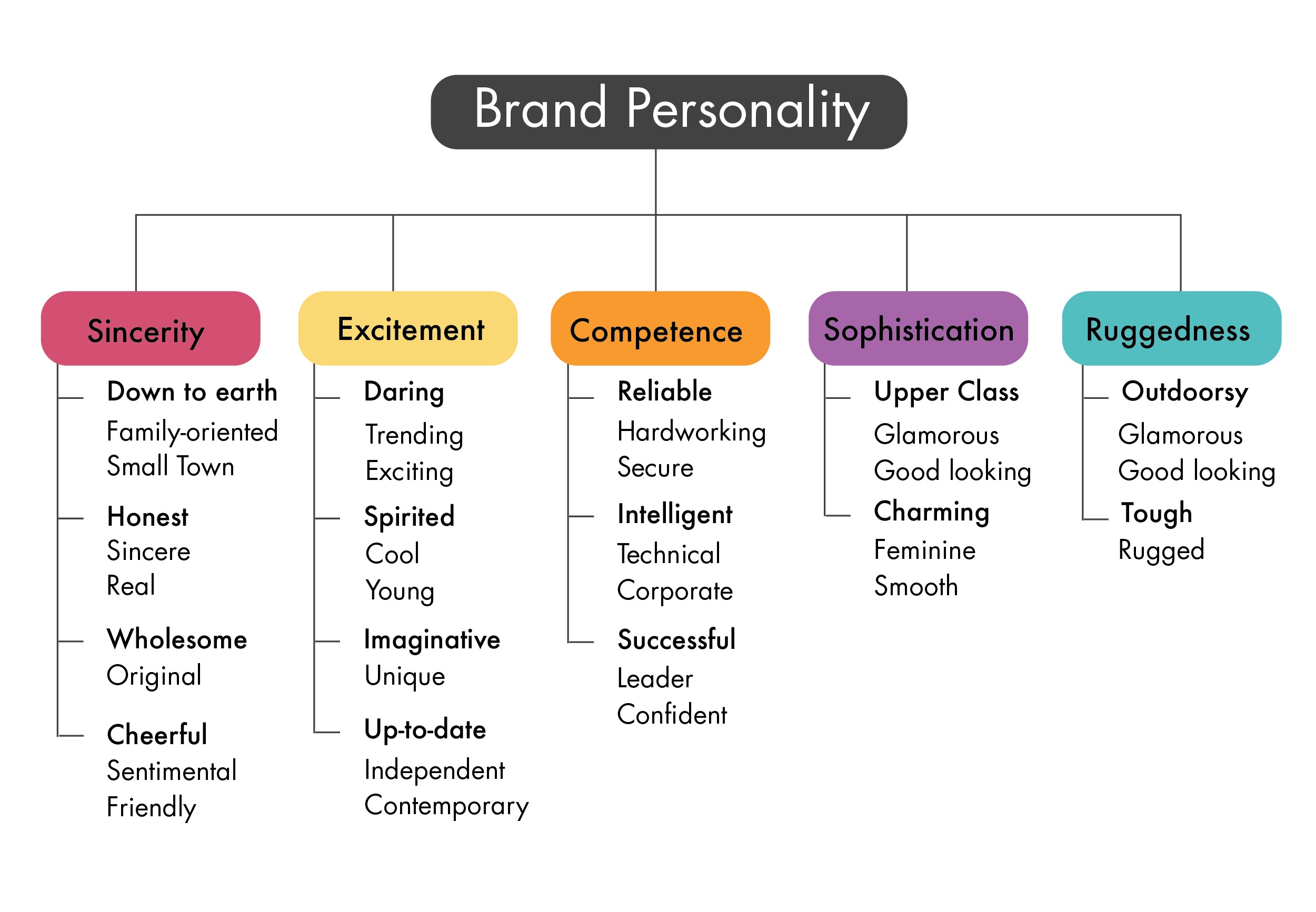
Treat your brand like a person. Give it a persona. List down the characteristics that you want your brand to have and show that in your messages.

To develop a persona for your brand you have to think of it as a living person. What ideals and values do you want your brand to carry? How do you want people to think of your brand? These questions will help guide you in creating the kind of personality that you want to impart onto your brand.

Brand Personality: does it increase Brand Loyalty? – VEMT – The ...
The Aaker Brand Personality Framework – A Good Guide to Follow! (Source: VEMT)

Use frameworks like Jennifer Aaker’s widely used brand personality framework to help determine what kind of a personality you want to give your brand. As a result of the personality you wish for your brand to have, the tone in which you communicate with your customers and through your advertising will be altered to reflect that personality.

Conclusion

Branding is quintessential in helping businesses grow. That is a sentiment that is reflected by over 80% of marketers. It shouldn’t come as a surprise as we know how through branding, companies can create a perception in the consumers’ mind that make their business’s offerings seem way more valuable than it should be. Branding is a long-term investment that will reap benefits in the form of name recognition and increased customer loyalty. It is one of the most powerful tool in your business’s arsenal to help your business sustain competitive advantage over competitors.

Today, we have covered what you should achieve from an effective branding campaign as well as the means to achieve it. We understand that this may be quite overwhelming to do on your own and to digest. If there is one thing that you MUST not forget after reading today’s article it is that CONSISTENCY IS KING in branding.

If you need help with understanding branding and how can you better position your brand, you can reach our Gurus at MarketingGuru who will give you a FREE consultation on your online branding strategy. We will take the time to go through with you what we can do to help your business with your branding and give you a tailor-made proposal that can help you with strategizing your online branding strategy.

We do customized proposals because it aligns with our brand’s promise of delivering beyond expectations

We will go above and beyond to customize your proposal and help you find the best-fit strategies to help improve your branding.

We hope you enjoyed and learned a thing or two about branding from this article!

Read More...